Steaming affects shelling
Poor steaming makes shells harder to open and can increase kernel breakage during shelling.

Process sequence for equipment planning
Understand how grading, steaming, shelling, separation, drying, humidifying, peeling, grading, color sorting, and inspection affect each other before choosing equipment.
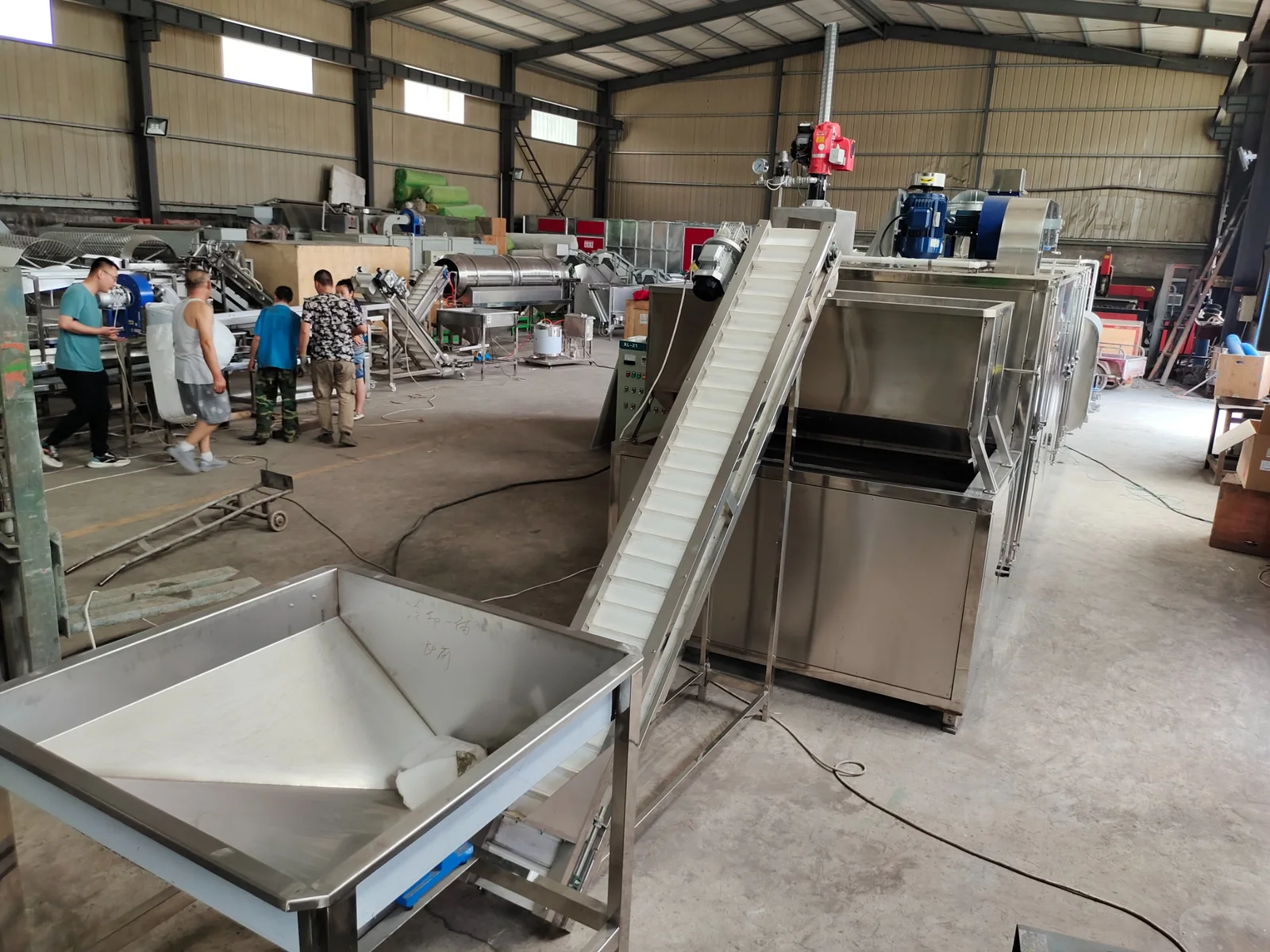
Machine sequence
Why the sequence matters
A practical cashew line depends on how each process affects the next one.
Poor steaming makes shells harder to open and can increase kernel breakage during shelling.
Kernel moisture must be controlled before peeling, otherwise testa skin may stick or kernels may break.
Shell and kernel separation can reduce the manual workload before final inspection.
Small processors can start with manual inspection and add optical sorting when output quality and volume justify it.
Group raw nuts by size before heat treatment.
2Prepare shells for safer and cleaner shelling.
3Open shells while controlling kernel breakage risk.
4Separate shells, kernels, and light impurities.
5Prepare kernel moisture before peeling.
6Condition kernels for better skin removal.
7Remove testa skin before grading and sorting.
8Group kernels by size and quality target.
9Use optical sorting where color quality matters.
10Final manual inspection before finished output.
Need machine recommendation?
Tell us your raw cashew input, current factory status, workers, utilities, and target stages. We will help you prepare a clearer equipment requirement.
Labor saving estimate
Enter only the key numbers. Use this as a rough labor-saving check before you send requirements.
Enter the main numbers, then calculate a rough labor saving and payback estimate.
Planning estimate only. Final ROI depends on machine configuration, utilities, operating hours, logistics, and the final order scope.